Ever watched those travel videos where a train winds through impossible mountain passes and thought, “Yeah, that’ll never be me”? Turns out, India’s railway network is practically begging you to prove yourself wrong.
I’ve spent countless hours pressed against train windows across this subcontinent, and I’m about to save you months of research on the most breathtaking train journeys through India’s landscapes.
From the toy train chugging up misty Himalayan slopes to carriages slicing through Rajasthan’s golden deserts, these five routes deliver the kind of views that make you forget to check your phone for hours (imagine that).
But here’s what those glossy travel magazines won’t tell you about these journeys…
The Darjeeling Himalayan Railway: A UNESCO Heritage Marvel
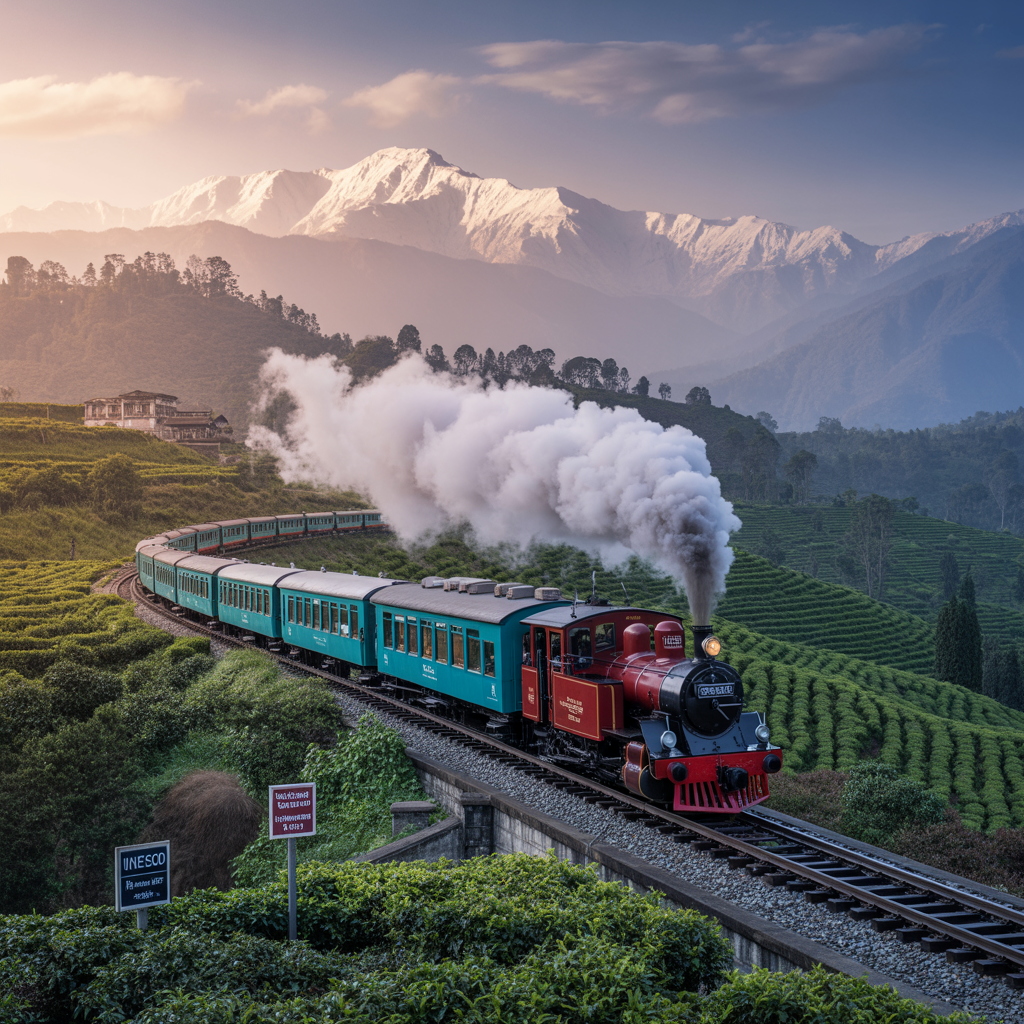
Panoramic views of Kanchenjunga along the journey
The Darjeeling Himalayn Railway is a 2 ft (610 mm) gauge railway that runs between New Jalpaiguri and Darjeeling in the state of West Bengal. Built between 1879 and 1881, it is about 88 km (55 mi) long. It climbs from about 100 m (328 ft) above sea level at New Jalpaiguri to about 2,200 m (7,218 ft) at Darjeeling, using six zig zags and five loops to gain altitude. Six diesel locomotives handle most of the scheduled service, with daily tourist trains from Darjeeling to Ghum – India’s highest railway station – and the steam-hauled Red Panda service from Darjeeling to Kurseong. Steam-enthusiast specials are hauled by vintage British-built B-Class steam locomotives.
The moment you board the narrow-gauge train in Darjeeling, you’re in for a visual feast few experiences can match. As the tiny locomotive chugs along the mountain tracks, Kanchenjunga – the world’s third highest peak – reveals itself in all its snow-capped glory.
What makes this view special? It’s not just seeing the mountain once. The meandering railway offers changing perspectives as you round each bend. One minute it’s framed between rhododendron trees, the next it dominates the horizon beyond terraced hillsides.
Morning journeys offer the clearest views when the mountain wears a golden crown from the sunrise. Photographers, grab a window seat on the right side heading uphill for the money shots.
Navigating the famous Batasia Loop
The Batasia Loop isn’t just a clever piece of engineering – it’s pure magic. The train spirals around itself, climbing upward while completing a full circle over its own track.
Standing at 7,000 feet above sea level, this marvel lets the train gain altitude gradually. The loop offers a 360-degree panorama that’ll leave you dizzy (in the best way possible).
The War Memorial at the center adds historical significance to this engineering wonder. When the train slows down here, lean out to capture that perfect shot – your train curving around the lush gardens with mountains towering in the background.
Experience of toy train whistles echoing through mountain passes
Nothing signals “mountain adventure” quite like the distinctive whistle of the DHR toy train. That sharp, nostalgic sound bouncing off distant ridges has remained unchanged since the 1880s.
The locals call it the “Himalayan horn” – a sound that’s become the heartbeat of these mountains. Children in villages along the route stop and wave at the familiar call, a tradition spanning generations.
What’s fascinating is how the echo changes with the landscape. In dense forests, it’s muffled and mysterious. Through open valleys, it carries for miles, announcing your arrival long before you’re visible.
Tea gardens that stretch to the horizon
The emerald carpets unfolding alongside the tracks aren’t just pretty scenery – they’re living history. These meticulously maintained tea gardens produce some of the world’s finest Darjeeling tea.
As the train crawls at its leisurely pace of 12 mph, you’ll spot tea pluckers with their baskets moving with practiced precision through the bushes. The geometric patterns of the plantations create a hypnotic landscape that seems to roll on forever.
The best stretch is between Kurseong and Darjeeling, where the gardens cascade down steep slopes. During spring, the fresh leaves create a vibrant green panorama that contrasts beautifully with the blue mountain sky.
For ticket booking visit IRCTC.
The Kalka-Shimla Railway: Colonial Legacy Through Pine Forests
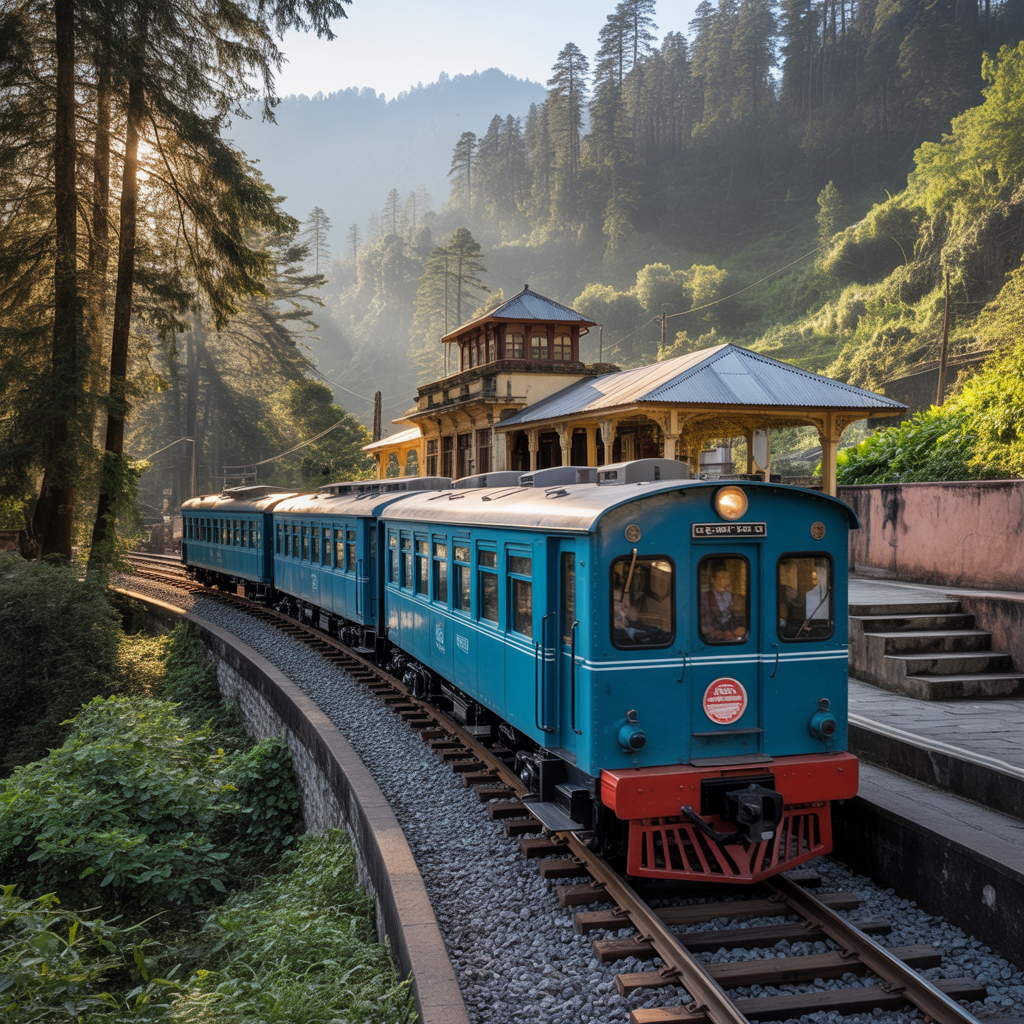
A. 102 tunnels and 864 bridges of architectural wonder
The Kalka-Shimla railway isn’t just a train ride—it’s an engineering marvel that’ll make your jaw drop. Built by the British in 1903, this narrow-gauge line snakes through 96 kilometers of some of the most challenging terrain imaginable in the state of Himachal Pradesh.
Each of the 102 tunnels tells a story of human determination. The longest one, Barog Tunnel (No. 33), stretches over a kilometer and comes with its own ghost story about the engineer who designed it. The locals still whisper about his spirit wandering the tracks at night.
And those 864 bridges? They’re not just functional crossings—they’re works of art. Most are viaducts with multi-arched galleries resembling Roman aqueducts. The most spectacular is the curved Kanoh Bridge with 34 arches stacked in tiers.
What’s crazy is how they built all this with technology from the early 1900s. No modern machinery, just thousands of workers using basic tools and incredible ingenuity. The precision of the stonework on these structures has stood firm against earthquakes, monsoons, and over a century of trains rumbling across them.
The Kalka Shimla Ng Express runs as train # 52453 t between Kalka (KLK) to Shimla (SML). It leaves Kalka at 06:20 hours and reaches Shimla station at 11:50 hours. The return service runs with train# 52454 which departs from Shimla at 17:45 hours and arrives Kalka at 22:55 hours.
B. Seasonal changes that transform the journey
The magic of the Kalka-Shimla railway is how completely different it feels depending on when you ride it.
Summer brings vibrant greenery with rhododendrons and wildflowers painting the hillsides in explosions of red, pink, and white. The air gets cooler as you climb, offering sweet relief from the baking plains below.
Monsoon season transforms everything. The forests turn impossibly lush, waterfalls appear out of nowhere, and mist hangs between pine trees like something from a fairy tale. Just be ready for occasional delays when the tracks need clearing after storms.
Fall delivers golden sunlight filtering through changing leaves. The clarity of mountain views this time of year is unbeatable—you can see for miles across valleys to snow-capped peaks in the distance.
But winter? That’s when this journey becomes truly magical. Waking up to find the entire landscape dusted in snow feels like riding through a Christmas card. The pine forests wear white coats, and sometimes the train itself gets decorated with icicles hanging from its roof.
C. Photography hotspots for capturing mountain vistas
Getting Instagram-worthy shots on this journey isn’t hard—the challenge is deciding which spots deserve your precious memory card space.
Barog station sits perfectly positioned at a curve that lets you capture the entire train snaking around the mountainside. Get there early, find the higher vantage point just above the station, and wait for that perfect moment when steam or diesel meets golden hour light.
Between Kandaghat and Taradevi, watch for the section where the track runs parallel to deep valleys. The train slows down here, giving you plenty of chances to frame those perfect shots of villages nestled thousands of feet below.
The approach to Shimla offers the most dramatic mountain panoramas. About 15 minutes before arrival, the right side of the train suddenly opens to a view of the Himalayan ranges that’ll make your heart skip. The light here is best in early morning when the peaks catch the first sun.
Pro tip: the vintage stations themselves make incredible photo subjects. Solan, Taradevi and Shoghi all retain their colonial-era charm with wooden benches, old signaling equipment and station masters in traditional uniforms.
For ticket booking visit IRCTC.
The Konkan Railway: Where Mountains Meet the Arabian Sea
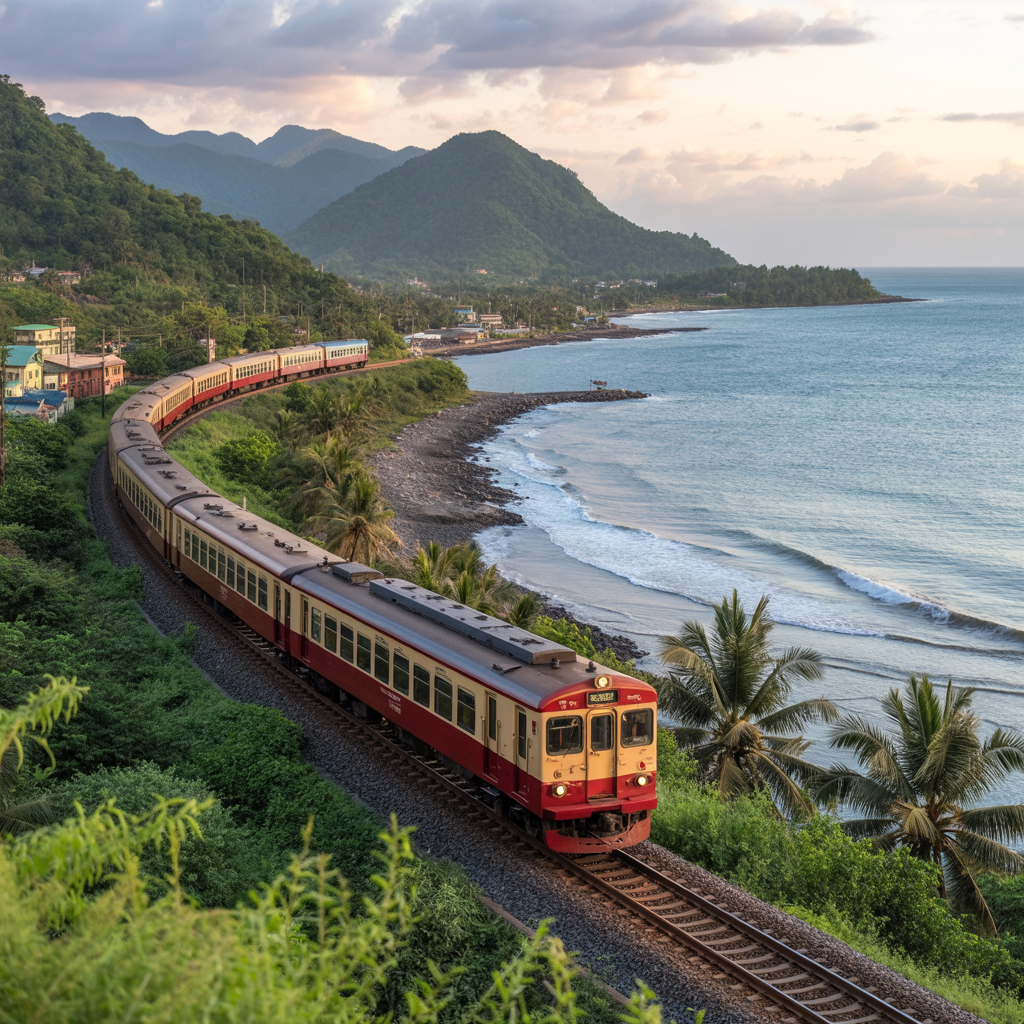
A. Crossing 91 tunnels and 2,000+ bridges along coastal Maharashtra
The Konkan Railway was constructed to connect Mumbai and Mangalore. The line covers a length of 741 km and connects Maharashtra, Karnataka and Goa.
The Konkan Railway isn’t just a train journey—it’s an engineering marvel that’ll make your jaw drop. Imagine chugging through 91 tunnels carved right through the Western Ghats! Some stretches have you popping in and out of tunnels every few minutes like a giant game of peek-a-boo with the landscape.
Those 2,000+ bridges? They’re not just crossing rivers—they’re spanning deep valleys where one glance down might have you gripping your armrest. The Panval Nadi viaduct stands 64 meters tall (that’s like a 20-story building) and stretches for 424 meters. You’ll cross it in seconds but the memory sticks forever.
B. Spectacular monsoon beauty of gushing waterfalls
During monsoon season, this journey transforms completely. The Western Ghats come alive with hundreds of temporary waterfalls cascading down lush green slopes. Some appear so close you’ll swear you could reach out and touch them.
The famous Dudhsagar Falls is the showstopper—a four-tiered waterfall that resembles a river of milk pouring down the mountainside. When your train crosses the bridge right in front of it, you’ll experience a moment of pure magic as water spray might even reach your window.
C. Pristine beaches visible from your window seat
Window seats on the Konkan Railway are worth fighting for. One minute you’re hugging mountain curves, the next you’re tracing the coastline with the Arabian Sea stretching endlessly before you.
The beaches here aren’t your typical tourist traps. They’re wild, untamed stretches of golden sand meeting turquoise water. You’ll catch glimpses of Guhagar, Kunkeshwar and countless unnamed coves that remain perfectly pristine. The train often runs so close to the shore that you can spot fishing boats bobbing in the distance and waves crashing against rocky outcrops.
D. Cultural diversity of coastal villages glimpsed along the route
The villages dotting the Konkan coast offer a fascinating cultural tapestry. From the colorful Konkani homes with their distinctive red-tiled roofs to temple spires rising unexpectedly from dense greenery, each settlement tells its own story.
Watch for the changing architectural styles as you cross from Maharashtra into Goa and then Karnataka. You might spot women in traditional Nauvari sarees working in fields, fishermen mending nets, or villagers gathered at rural stations. Each glimpse is a snapshot of coastal life largely unchanged for generations.
E. Culinary experiences at station stops
The station stops along the Konkan Railway offer a culinary tour of the western coast. When the train pulls into Ratnagiri station, vendors appear with boxes of their famous Alphonso mangoes (if you’re traveling in season).
At Madgaon in Goa, don’t miss the chance to grab some ros omelette—a spicy curry-dipped treat that’s a local specialty. Further south, stations in Karnataka offer neer dosa and Mangalorean fish curry.
The most charming part? The homemade snacks sold by local women at smaller stations—sol kadi served in small plastic cups, crispy bombil fry wrapped in newspaper, or sweet modaks that melt in your mouth. These aren’t fancy restaurant meals, but authentic tastes of the Konkan that you’ll remember long after your journey ends.
The Nilgiri Mountain Railway: Southern India’s Blue Mountain Express
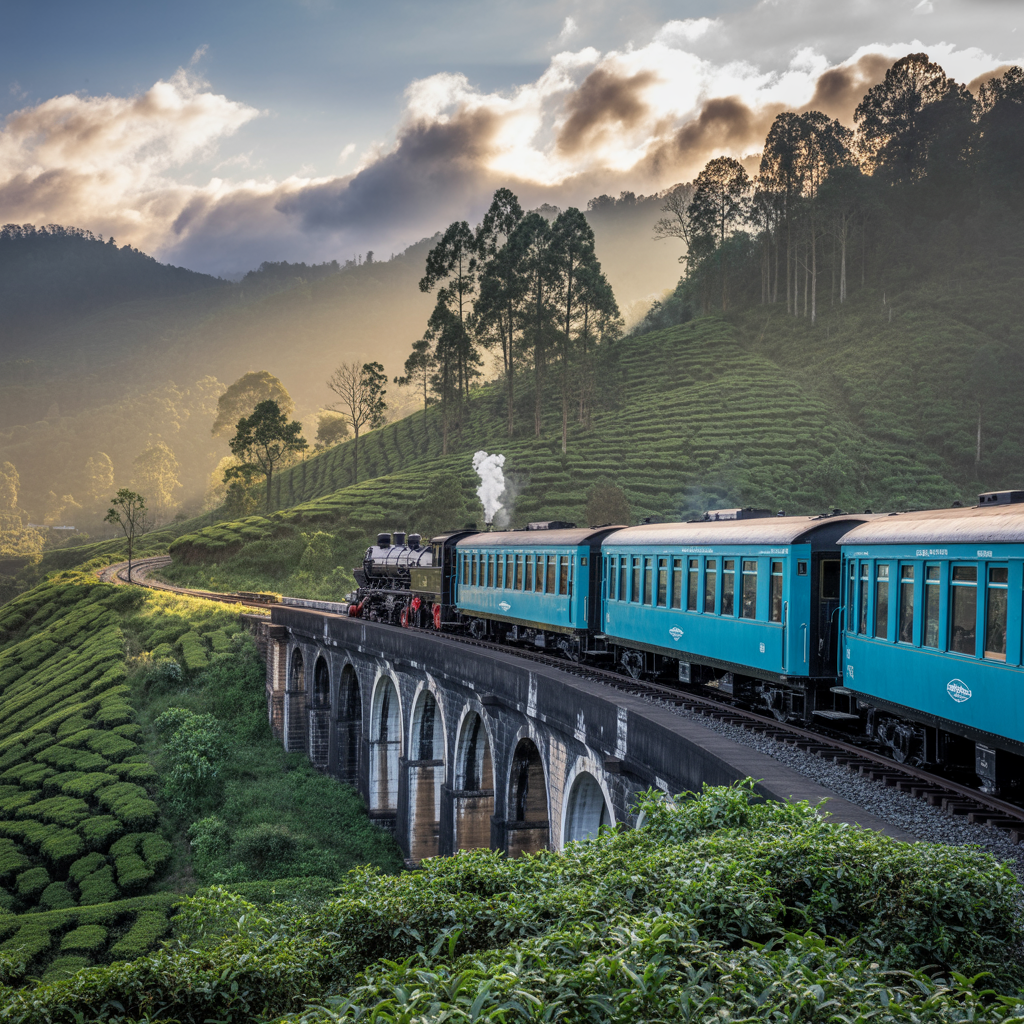
A. Rack and pinion technology that conquers steep gradients
The Nilgiri Mountain Railway isn’t your average train ride. This little blue train climbs some seriously steep hills that would make regular trains throw in the towel. How does it manage? The secret is its rack and pinion system—basically a toothed track between the regular rails and matching gears underneath the train.
When the slope gets too steep (we’re talking gradients of 1:12.5), the train engages these special gears that literally pull it up the mountain, tooth by tooth. It’s like watching a determined climber using specialized gear to scale a cliff. This ingenious 19th-century technology still works perfectly today, over 100 years later.
B. Misty views through eucalyptus forests
The journey from Mettupalayam to Ooty treats you to some drop-dead gorgeous scenery. As the train chugs upward, you’ll be surrounded by eucalyptus forests that fill the air with their distinctive fresh scent.
The mist often rolls through these forests, creating a dreamy, otherworldly atmosphere. One minute you’re looking at crystal clear views of the valleys below, the next you’re enveloped in clouds so thick you can barely see the trees beside the track. When the mist suddenly clears, the revealing views will make you grab your camera every single time.
C. Wildlife spotting opportunities in surrounding sanctuaries
The train passes near several wildlife sanctuaries, making it a safari on rails. Keep your eyes peeled and you might catch glimpses of wild elephants, gaur (Indian bison), and various deer species roaming freely.
Birdwatchers, bring your binoculars! The region boasts over 300 bird species, including the Nilgiri flycatcher and laughing thrush—birds you won’t find anywhere else on Earth.
The train moves slowly enough that you’ve got plenty of time to spot wildlife. Some regular passengers swear the animals have learned the train schedule and often come to check out the passing carriages.
For a tour of Nilgiri biosphere and the Train, visit 5 Senses Tours.
D. Colonial-era stations preserved in time
Each station along the route feels like stepping into a time capsule. The British-built stations at Coonoor, Wellington, and Ooty retain their charming colonial architecture—complete with hanging flower baskets and vintage signboards.
Coonoor station deserves special mention with its quaint tea room serving local Nilgiri tea. The station masters still use token systems and manual signaling in parts, just like they did a century ago.
These stations aren’t museums—they’re living, working pieces of history that continue to serve their original purpose. The vintage ticket counters, waiting rooms with wooden benches, and old-fashioned water columns for the steam engines transport you back to a bygone era.
For ticket booking visit IRCTC.
The Vistadome Experience on Araku Valley Railway
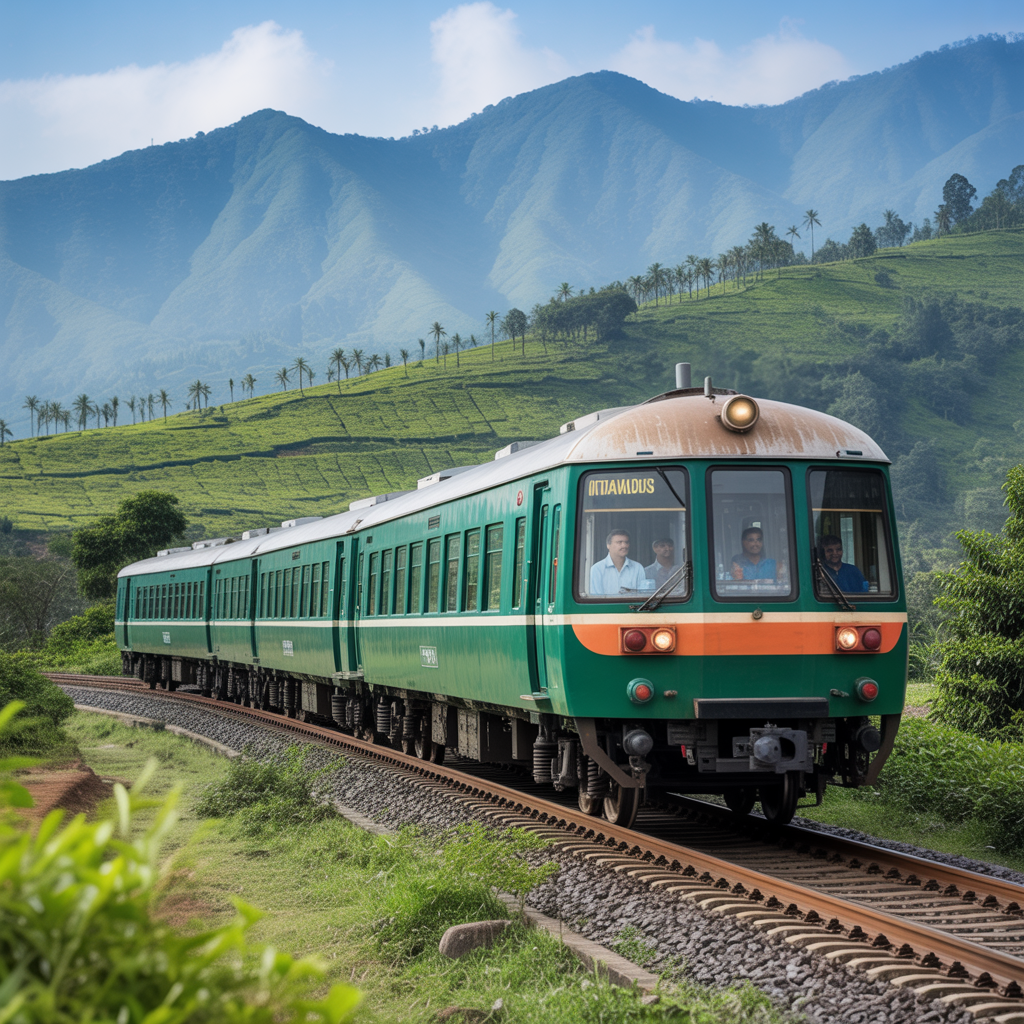
Glass-roofed coaches providing 360° views
The Vistadome coach is available on the Visakhapatnam–Kirandul Express which is Train No. 58501 offering a scenic journey through the Eastern Ghats in the state of Andhra Pradesh.
Nothing beats sinking into your seat as the world unfolds above and around you through crystal-clear glass panels. The Vistadome coaches on the Araku Valley Railway aren’t your average train cars – they’re moving observation decks designed to make your jaw drop.
The specialized coaches feature massive glass roofs that curve into the sides, giving you uninterrupted views of everything from lush forest canopies to star-filled night skies. Unlike traditional trains where you’re constantly leaning toward tiny windows, here you’re literally surrounded by the landscape.
Most travelers don’t realize these coaches also have specially designed anti-glare glass that prevents the interior from heating up, keeping you comfortable while you’re busy being mesmerized.
Breathtaking journey through 58 tunnels and valleys
This isn’t just a train ride – it’s practically a roller coaster through mountains. The route tackles 58 tunnels carved straight through the Eastern Ghats, each one an engineering marvel.
The most heart-stopping moment? Emerging from the darkness of Tunnel 42 to cross the Charada Valley on a vertigo-inducing bridge nearly 100 feet high. You’ll feel suspended in mid-air as the train creeps across, with nothing but glass between you and the dramatic drop below.
The constant shift between dark tunnels and sudden bursts of valley panoramas creates a rhythm that keeps your camera ready and your eyes wide. Many travelers swear the Araku route offers more dramatic transitions per mile than any other Indian railway journey.
Tribal culture visible throughout the scenic route
The Vistadome experience isn’t just about nature – it’s a window into vibrant tribal life. As you glide through the Eastern Ghats, you’ll spot colorful Dhimsa dancers performing in villages, their movements as fluid as the landscape itself.
Keep your eyes peeled for the distinctive red and white patterns of traditional Araku homes nestled between coffee plantations. During harvest season (October-December), you’ll see tribal farmers drying coffee beans on massive mats alongside the tracks.
The train makes a strategic slow-down near major tribal settlements, giving you time to notice details like the intricate pineapple fiber crafts being made by artisans who wave as you pass by.
Best photography angles from specialized viewing decks
Photography enthusiasts, you’re in for a treat. The Vistadome coaches include dedicated observation decks at both ends that rotate 180° for unobstructed shots.
For the money shot, position yourself on the left side (facing forward) about 20 minutes after leaving Vishakapatnam when the train curves around Sankaram Hill. This gives you a perfect composition with ancient Buddhist caves visible on the hillside and the train’s curve creating a leading line.
The most underrated photo opportunity happens during early morning trips when mist clings to the valleys between tunnels 36-40. The rotating deck lets you capture this ethereal scene without window reflections ruining your shot.
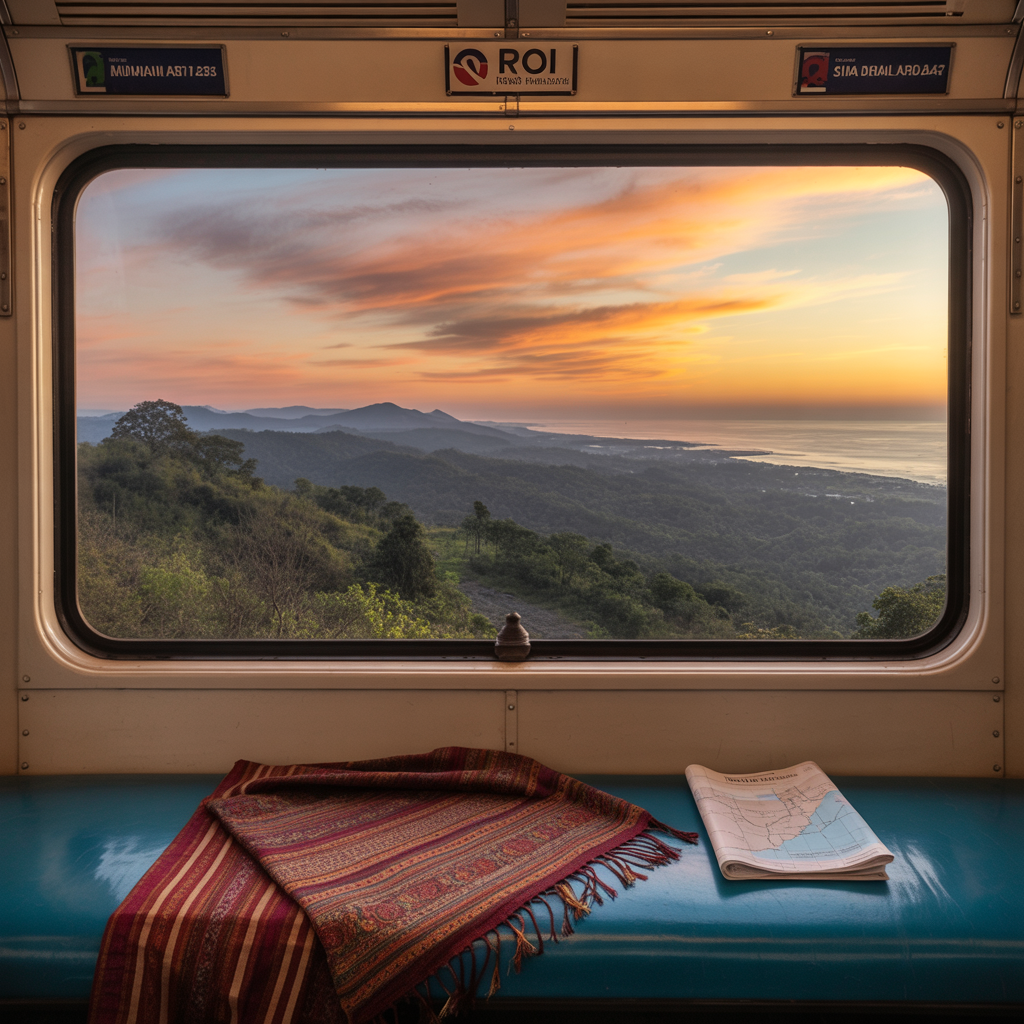
Exploring India by Rail: An Unforgettable Adventure
From the snow-capped Himalayas to the azure coastlines of the Arabian Sea, India’s historic railway journeys offer travelers a unique perspective on the country’s diverse landscapes. The UNESCO-recognized Darjeeling Himalayan Railway winds through misty mountains, while the colonial-era Kalka-Shimla route showcases stunning pine forests. The engineering marvel of the Konkan Railway balances between mountains and sea, and the charming Nilgiri Mountain Railway chugs through southern India’s tea plantations. For those seeking panoramic views, the Vistadome coaches on the Araku Valley Railway provide an immersive experience like no other.
For ticket booking visit IRCTC.
Whether you’re a railway enthusiast, nature lover, or cultural explorer, these five exceptional train journeys showcase India’s natural beauty and engineering prowess in equal measure. Each route tells its own story through the landscape it traverses, offering not just transportation but a window into India’s soul. Pack your camera, bring your sense of adventure, and prepare to be mesmerized by these remarkable rail experiences that continue to captivate travelers from around the world.
For culture tours in india, please visit 5 Senses Tours.
For immersive culture walks in India, visit 5 Senses Walks.
Discover more from Great Holiday Ideas
Subscribe to get the latest posts sent to your email.