Ever stood at the edge of a cliff, wondering if Mother Nature was showing off just for you? Because that’s India’s landscapes in a nutshell—they don’t just impress, they fundamentally alter your definition of beauty.
I’m about to take you on a virtual expedition through India’s most breathtaking landscapes that blend the impossible with the real. From the frozen deserts of Ladakh to Kerala’s misty backwaters, these aren’t just places—they’re emotional experiences.
The thing about Indian landscapes is their shocking diversity. One day you’re sweating in a desert, the next you’re wrapped in a shawl watching snow-capped Himalayas turn golden at sunrise.
But here’s what the travel brochures won’t tell you about these seven mind-blowing destinations…
The Mystical Valley of Flowers in Uttarakhand
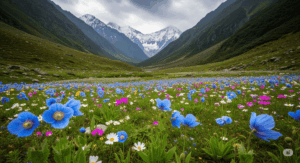
Discover Nature’s Colorful Canvas at 3,600 Meters
Picture this: you’re standing in a sea of flowers stretching as far as your eyes can see, surrounded by snow-capped Himalayan peaks. That’s the Valley of Flowers for you—not just a place, but a full-blown sensory explosion.
This UNESCO World Heritage Site sits at a breathtaking 3,600 meters above sea level in Uttarakhand, and trust me, the altitude isn’t the only thing that’ll leave you gasping. The valley floor transforms into a living rainbow with over 600 species of wildflowers that bloom in waves of color.
Ever seen blue poppies dancing in the mountain breeze? Or the rare Brahma Kamal that blooms just once a year? They’re all here, showing off against a backdrop that looks like it was painted by some nature-obsessed artist.
The valley changes its palette every few weeks. Early season brings primulas and marsh marigolds, midsummer explodes with orchids and geraniums, while August brings seas of balsams that turn entire slopes pink and purple.
What makes this place magical isn’t just the flowers—it’s how they appear almost defiantly in this harsh alpine terrain. These blooms fight through frozen winters and monsoon rains for their moment in the sun. Talk about persistence!
Best Time to Visit for Maximum Blooms
Timing is everything when it comes to the Valley of Flowers. Show up at the wrong time and you might wonder what all the fuss is about. But nail your timing and… wow.
The valley stays buried under thick snow until late June. The park officially opens on June 1st, but the real show starts from mid-July to mid-August. This sweet spot is when the monsoon-kissed valley erupts in a riot of colors.
Here’s the month-by-month breakdown:
| Month | What You’ll See | Crowd Level |
|---|---|---|
| June | Early bloomers, melting snow | Low |
| July | Peak flowering begins, lush greenery | Medium |
| August | Maximum diversity, entire valley in bloom | High |
| September | Late bloomers, seeds forming | Medium |
Many travelers make the mistake of visiting in May (too snowy) or October (too late). The monsoon might scare some people off, but those light showers are exactly what powers this floral explosion.
Pro tip: plan for at least two days in the valley. The weather changes rapidly here, and what’s cloudy one day might be gloriously clear the next.
Rare Flora and Fauna That Call the Valley Home
The Valley of Flowers isn’t just another pretty face in India’s landscape portfolio—it’s a biodiversity hotspot that scientists and botanists geek out over.
Among the stars of the show is the Blue Poppy (Meconopsis aculeata), a flower so vibrantly blue it looks almost artificial. Then there’s the cobra lily (Arisaema tortuosum) with its snake-like appearance that’ll stop you in your tracks.
The valley is also home to some serious medicinal powerhouses. Local healers have used these plants for centuries, and modern medicine is just catching up. The Saussurea obvallata (Brahma Kamal) isn’t just stunning—it’s used to treat coughs, cuts, and even high-altitude sickness.
Wildlife here plays hide and seek. You might glimpse:
- The elusive snow leopard (if you’re incredibly lucky)
- Himalayan black bears wandering the upper reaches
- Musk deer darting between meadows
- Flying squirrels gliding between trees
Butterflies create a second layer of movement above the flowers—over 60 species, with some found nowhere else on Earth. They flutter around like tiny fragments of stained glass.
The most magical part? Many of these species are adapted specifically to this harsh environment, evolving over thousands of years to survive here and nowhere else.
Trekking Routes for Every Experience Level
Getting to this floral paradise is part of the adventure. The valley doesn’t give itself up easily—you’ve got to earn those views.
The standard route starts from Govindghat, a small settlement that serves as the gateway. From there, it’s an 11-mile trek to Ghangaria, your base camp. Don’t worry if you’re not a trekking pro. This path is well-maintained with rest stops along the way.
For first-timers:
- Govindghat to Ghangaria (14 km): A gradual ascent following the Pushpawati River
- Ghangaria to Valley entrance (3 km): A relatively easy morning walk
For adventure seekers:
- The Hemkund Sahib detour: Add an extra day to visit this high-altitude Sikh shrine at 4,329 meters
- The Ridge Route: A challenging path above the valley offering panoramic views (guided only)
Not feeling the walk? Mule rides are available for most of the main route (though I’d recommend using your own legs for the actual valley portion—the flowers deserve your full, slow attention).
Remember to pack light but right. The weather changes quickly here, so layers are your best friend. And those walking sticks vendors offer at the start? Worth every rupee when you’re navigating rocky patches.
For a podcast on best places to visit in India, please visit Incredible India.
Majestic Landscapes of Ladakh’s Cold Desert
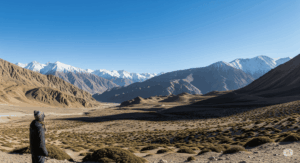
A. Pangong Tso: The Ever-Changing Blue Marvel
Imagine standing at the shore of a lake that shifts between deep navy, turquoise, and azure throughout the day. That’s Pangong Tso for you. This 134 km long lake sits at over 14,000 feet above sea level, with 60% of it stretching into Tibet.
The real magic happens as sunlight dances across its surface. Morning brings soft blue tones, while midday transforms it into a vibrant turquoise mirror. By sunset, the water takes on rich golden hues that’ll make your jaw drop. Trust me, no filter can capture what your eyes will see here.
Since “3 Idiots” featured this spot, tourists have flocked here. But step away from the main viewing points, walk just 15 minutes along the shore, and you’ll find peaceful spots where it’s just you and that hypnotic blue expanse.
B. Magnetic Hill: Where Gravity Seems to Reverse
This place will mess with your mind in the best possible way. Park your car at the marked spot, put it in neutral, and watch as it appears to roll uphill against gravity. Seriously.
While scientists explain it as an optical illusion created by the surrounding landscape that tricks your brain about what’s uphill versus downhill, the experience feels genuinely supernatural. The military maintains a sign marking this “Magnetic Hill” that’s become one of the most photographed spots in Ladakh.
Locals have their own theories – some say it’s a gateway to heaven pulling good souls upward, while others claim it’s a magnetic force strong enough to pull aircraft higher, forcing planes to increase altitude when passing over.
C. Nubra Valley’s Sand Dunes Surrounded by Snow-Capped Mountains
Talk about nature showing off! Nubra Valley serves up one of those impossible landscapes that make you question reality – golden sand dunes completely surrounded by towering snow-capped mountains.
The Hunder sand dunes stretch for miles between Diskit and Hunder villages. What makes this place truly special is the stark contrast: you’re standing in what feels like a slice of the Sahara while gazing up at glacial peaks.
Double-humped Bactrian camels, descendants of those used on ancient Silk Road trading caravans, roam these dunes. A sunset camel ride here delivers the kind of surreal experience that’s hard to process – desert sands beneath you, icy peaks ahead, and a sky ablaze with colors you didn’t know existed.
D. Photography Tips for Capturing Ladakh’s Unique Light
Ladakh’s exceptional light conditions make it a photographer’s playground, but they also create unique challenges.
The high altitude means less atmospheric filtering, resulting in harsh daylight and extreme contrast. Early morning (6-8 AM) and late afternoon (4-6 PM) offer the most magical lighting. During these golden hours, the mountains catch fire with color.
Pack these essentials:
- UV filter (the thinner atmosphere means stronger UV light)
- Circular polarizer (to manage reflections on Pangong Tso)
- Neutral density filters (to capture flowing water without overexposure)
- Extra batteries (they drain faster in cold temperatures)
For night photography, Ladakh’s minimal light pollution offers incredible stargazing opportunities. Use a sturdy tripod and experiment with 20-30 second exposures at ISO 1600-3200 to capture the Milky Way arching over monasteries or mountains.
E. Local Monasteries That Enhance the Otherworldly Scenery
Ladakh’s monasteries aren’t just religious sites – they’re architectural marvels that perfectly complement the dramatic landscapes around them.
Thiksey Monastery, often called “Mini Potala” for its resemblance to Tibet’s Potala Palace, rises dramatically from a hilltop. Its 12 stories house stunning prayer halls and a 15-meter Buddha statue. Visit at dawn when monks gather for morning prayers, filling the air with resonant chanting and horn music.
Diskit Monastery in Nubra Valley features a massive 32-meter Maitreya Buddha statue that gazes serenely down the valley. From its courtyard, you get panoramic views of sand dunes meeting mountains.
The 900-year-old Alchi Monastery breaks the pattern of hilltop locations, sitting beside the Indus River. Inside are some of the oldest surviving paintings in Ladakh, showing distinct Kashmiri influences with intricate details that have somehow survived centuries in this harsh climate.
For a guided tour of Ladakh please check 1 week in ladakh.
The Living Root Bridges of Meghalaya
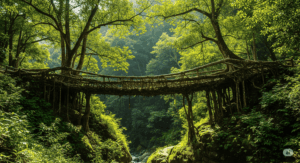
How These Natural Wonders Are Created Over Generations
You’ve probably seen some incredible bridges in your lifetime. But trust me, nothing compares to the living root bridges of Meghalaya. These aren’t your typical man-made structures – they’re literally alive.
The indigenous Khasi people don’t build these bridges. They grow them. Using the roots of the incredibly strong Ficus elastica tree (rubber fig), they guide these living roots across rivers and streams. The process is mind-blowingly patient: younger members of the tribe start the bridge, knowing they’ll never see it completed in their lifetime.
Here’s how it works: they stretch young, pliable roots across a stream, often using hollowed-out betel nut trunks as guidance systems. As the roots reach the other side, they’re planted into the soil. Over 15-30 years, the roots strengthen, intertwine, and eventually create a living bridge strong enough to hold 50+ people at once.
Double-Decker Root Bridge at Nongriat Village
The crown jewel of these natural wonders? The famous Double-Decker Root Bridge at Nongriat Village. This engineering marvel stands as testimony to human ingenuity working in harmony with nature.
Getting there isn’t easy. You’ll need to descend about 3,000 steps from the nearest road (and climb back up later – ouch!). But that first glimpse of the bridge’s two levels spanning across the crystal-clear waters below? Worth every burning muscle.
This particular bridge is over 150 years old and continues to grow stronger each year. Unlike concrete bridges that weaken over time, these living structures gain strength as their roots grow thicker and more entangled. The double-decker design wasn’t created overnight – the second level was added after the first was established, showcasing the multi-generational planning of the Khasi people.
The Surrounding Rainforest Ecosystem
Step into the area around these bridges and you’re entering one of India’s most unique ecosystems. Meghalaya isn’t called the “abode of clouds” for nothing – it’s one of the wettest places on Earth, receiving an average annual rainfall that would make Seattle look like a desert.
This perpetual moisture creates a verdant paradise. Ferns unfurl from every surface, orchids cling to tree trunks, and moss carpets everything in emerald velvet. The bridges themselves become mini-ecosystems, hosting countless plant species that take root in their living structure.
The forest teems with life – from colorful butterflies that dance around your head to the symphony of bird calls echoing through the canopy. If you’re lucky, you might spot the endangered clouded leopard or the Hoolock gibbon swinging through the trees.
These bridges don’t just connect physical places – they connect entire ecosystems, allowing both humans and wildlife to traverse the challenging terrain without disturbing the delicate balance of the forest.
Local Khasi Traditions Connected to These Bridges
The Khasi people view these bridges as more than convenient crossings – they’re sacred connections to their ancestors. Each bridge represents the accumulated knowledge and effort of multiple generations.
In Khasi tradition, nature isn’t something to be conquered but a partner to be respected. This philosophy is evident in how they approach the bridges – they don’t force the roots to grow, but gently guide them, working with the tree’s natural tendencies.
The bridges serve as gathering places where elders pass down traditional knowledge to younger generations. Children learn patience as they help tend to young bridges that their grandchildren might one day use. This creates a profound sense of continuity and responsibility.
What’s fascinating is how these bridges embody the Khasi’s matrilineal society – property and ancestral knowledge pass through the female line. The bridges, like the family name, connect the past to the future through careful stewardship.
Unlike our throwaway culture, the Khasi create infrastructure designed to last centuries. Their approach to these living bridges offers a powerful lesson in sustainability that the rest of the world is only beginning to understand.
For immersive culture walks in India, please visit 5 senses walks.
Kerala’s Emerald Backwaters
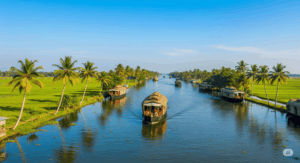
Alleppey’s Maze of Tranquil Waterways
Picture this: gliding through emerald channels so still they mirror the coconut palms perfectly. That’s Alleppey for you – the Venice of the East. The network of canals, lakes, and lagoons stretches over 900 kilometers, creating a water world unlike any other in India.
What makes these waterways truly special isn’t just their beauty – it’s the perfect balance of human life and nature coexisting for centuries. Every turn reveals something new: a child waving from the shore, fishermen casting nets with practiced precision, or herons taking flight from the water’s edge.
Morning fog transforms the landscape into something magical, with boats emerging from the mist like apparitions. The narrow canals connect villages that are completely inaccessible by road, creating a parallel civilization that moves at its own unhurried pace.
Traditional Houseboat Experiences
Ever slept on a converted rice barge? The kettuvallams (traditional houseboats) were once workhorses of these waters, transporting rice and spices. Today, they’re floating luxury accommodations with bedrooms, bathrooms, and open-air lounges.
The best part? Your private chef preparing authentic Kerala cuisine right on board. Fresh karimeen (pearl spot fish), spicy prawn curry, and fluffy appams served on banana leaves while you watch village life drift by. Pure bliss.
Each houseboat is unique, crafted from local materials – jackwood planks held together with coir rope (not a single nail!), and topped with woven palm leaf roofs. The craftsmanship involved is staggering – these boats can last decades with proper maintenance.
Your boatman isn’t just steering – he’s your local guide, pointing out hidden corners and sharing stories passed down through generations. He knows exactly which narrow canal turns lead to the most breathtaking views.
Vibrant Birdlife Along the Water’s Edge
The backwaters are a birdwatcher’s paradise. Kingfishers flash brilliant blue as they dive for fish. Egrets stalk the shallows with elegant patience. During migratory seasons, the population explodes with visitors from as far as Siberia.
Dawn is prime time for spotting birds. The purple heron with its dramatic plumage, the darter (often called snake-bird) drying its wings on overhanging branches, and if you’re really lucky, the elusive Malabar Trogon with its crimson belly.
The ecosystem here creates perfect habitats: marshy edges for waders, tree-lined banks for perching birds, and open water for diving species. Bring binoculars – you’ll want them for spotting the smaller jewels like bee-eaters and sunbirds flitting between flowering trees.
Connecting with Local Fishing Communities
The backwaters aren’t just pretty – they’re the livelihood of thousands. Families have fished these waters for generations using techniques barely changed in centuries.
The famous Chinese fishing nets (cheena vala) are engineering marvels operated by counterweights and levers. Watching fishermen manipulate these massive structures at sunset is mesmerizing. They’ll often let visitors try their hand at operating them – harder than it looks!
Women gather mussels and clams while men cast throw-nets with balletic precision. Many families welcome visitors into their homes, offering fresh coconut water and stories of backwater life.
The most fascinating aspect? Their ecological knowledge. They can read the water’s movements, predict fish locations by subtle surface ripples, and navigate complex channels without maps.
Sunset Views That Transform the Landscape
As day turns to dusk, the backwaters transform. The water shifts from emerald to liquid gold, then deepens to purple. This is when Kerala truly earns its “God’s Own Country” nickname.
The best vantage point? Your houseboat deck, drink in hand, as the sky puts on its daily spectacular. Silhouettes of palm trees and fishing boats create perfect postcard scenes against the riot of oranges and pinks.
Sometimes, you’ll catch distant temple drums or church bells drifting across the water. Other times, it’s just the gentle lapping of water against your boat and the evening chorus of frogs and cicadas.
Each season brings different sunset moods. Monsoon sunsets feature dramatic cloud formations in vivid colors, while winter brings clearer skies and sharper light. No two evenings are ever the same on these ancient waters.
For a tour of Kerala, please visit 1 week in Kerala.
The Dramatic Spiti Valley in Himachal Pradesh
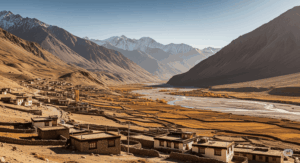
Moon-Like Terrains That Feel Like Another Planet
Ever stared at photos of the lunar surface and thought, “I’d love to walk there someday”? Well, put away your space suit and grab your hiking boots instead.
Spiti Valley might just be the closest thing to walking on the moon without leaving Earth. The vast, barren landscapes stretch for miles, painted in shades of brown, gray, and occasional splashes of green near water sources.
When you’re standing in the middle of this high-altitude desert at 12,500 feet, surrounded by nothing but rugged mountains and an endless sky, the silence is almost deafening. The land feels ancient, untouched, like you’ve stumbled upon a secret corner of the universe.
The terrain changes dramatically as you travel through—from sharp, jagged rock formations to smooth, rounded hills that look like they’ve been sculpted by some cosmic artist. During summer, the stark contrast between the azure sky and the earthy tones below creates a surreal panorama that no photo can truly capture.
And if you visit after a light snowfall? That’s when Spiti truly transforms into another world entirely.
Ancient Monasteries Perched on Impossible Cliffs
These aren’t just buildings—they’re defiant acts of human determination perched on cliff edges that would make mountain goats nervous.
Take Key Monastery, for instance. Dating back to the 11th century, this ancient structure clings to a hill at 13,668 feet, looking like it grew organically from the mountain itself. From a distance, you might wonder if it’s about to tumble down, but it’s stood firm for over a thousand years.
Then there’s Dhankar Monastery, balanced so precariously on a cliff edge that it’s officially listed as one of the most endangered monuments in the world. Yet the monks who live here seem utterly unfazed, going about their daily rituals while perched between heaven and earth.
What makes these monasteries truly special isn’t just their death-defying locations. It’s stepping inside to find colorful prayer flags fluttering against stark landscapes, intricate murals hiding in dim corners, and the low hum of monks chanting scriptures that have echoed through these valleys for centuries.
When you’re standing in the courtyard of Tabo Monastery (known as the “Ajanta of the Himalayas”), watching the morning light illuminate 1,000-year-old Buddhist paintings, you’ll understand why people travel across the world to experience this.
Unique Geological Formations and Their History
Spiti Valley isn’t just pretty to look at—it’s a living geology textbook that scientists drool over.
The entire region sits on what was once the Tethys Sea floor. Yes, you’re literally walking on an ancient ocean bed that was thrust upward when the Indian and Eurasian tectonic plates collided millions of years ago, forming the Himalayas.
This explains the valley’s most mind-blowing feature: marine fossils at 15,000 feet above sea level. In places like Langza village, you can find ammonite fossils (spiral-shaped marine creatures) just lying on the ground. Let that sink in—ocean creatures, now found at heights where oxygen is thin.
The Pin Valley’s multicolored rock formations tell a story spanning 500 million years of Earth’s history. Layers of sediment compressed over eons have created natural striations that geologists study to understand our planet’s past.
But the most visually striking formations are the natural rock pillars near villages like Kibber and Hikkim. Carved by wind and water over thousands of years, these towers stand like sentinels guarding the valley, some reaching heights of over 200 feet.
Stargazing Opportunities in One of India’s Clearest Skies
The night sky in Spiti Valley isn’t just dark—it’s so pristine that first-time visitors often gasp when they look up after sunset.
With minimal light pollution, high altitude, and dry desert air, Spiti offers stargazing conditions that rival professional observatories. On clear nights (which are most nights), the Milky Way doesn’t just appear as a faint smudge—it blazes across the sky in a ribbon so bright and detailed you can see its structure with the naked eye.
The stars here don’t just twinkle; they burn with a steady intensity that makes you realize what our ancestors saw when they created the first constellations. Shooting stars are so common that locals joke about them being “celestial traffic.”
For serious astronomy buffs, spots like Langza and Komic (one of the highest villages in the world at 15,050 feet) offer unobstructed 360-degree views of the night sky. Bring a decent pair of binoculars, and you’ll easily spot Jupiter’s moons, Saturn’s rings, and countless deep-sky objects.
During August, the Perseid meteor shower turns the sky into a cosmic light show, with dozens of meteors streaking across the sky every hour. Many travelers time their visits specifically for this event, camping under the open sky to witness nature’s ultimate fireworks display.
For ideas on incredible places to visit in India, please visit Incredible India.
Andaman’s Underwater Paradise

Radhanagar Beach: World’s Most Beautiful Shoreline
Picture this: powdery white sand that feels like walking on clouds, crystal-clear turquoise waters stretching to the horizon, and a sunset that paints the sky in unbelievable shades of orange and pink. That’s Radhanagar Beach for you—no exaggeration.
Named “Asia’s Best Beach” by TIME Magazine, this slice of paradise on Havelock Island isn’t just another pretty beach. The shoreline extends for almost 2 kilometers, giving you plenty of space to find your own private spot, even during peak season.
The water is so clear you can see your toes wiggling in the sand beneath the surface. Unlike many famous beaches worldwide, Radhanagar remains surprisingly uncrowded, especially if you visit during weekdays or early mornings.
Grab a coconut from one of the small vendors at the entrance, spread your towel under the shade of an overhanging palm tree, and just… breathe. The gentle lapping of waves here has a rhythm that somehow syncs with your heartbeat within minutes.
Coral Reefs Teeming with Vibrant Marine Life
The real magic of Andaman happens below the surface. Slip on a mask and snorkel (or go full scuba if you’re certified) and enter a world that makes Avatar look boring.
The coral reefs surrounding these islands host over 560 species of coral and 1,200 varieties of fish. Yeah, you read that right—1,200!
Some spots you absolutely can’t miss:
- North Button Island: Home to massive brain corals and schools of angelfish that follow you like curious puppies
- Fish Rock: Where barracudas hunt in synchronized silver squadrons
- Dixon’s Pinnacle: A underwater mountain covered in soft corals that wave like they’re dancing to music only they can hear
What makes Andaman’s reefs special isn’t just their diversity but their health. While many reef systems worldwide are bleaching, many patches here remain vibrant and thriving.
The water visibility often exceeds 30 meters, meaning you can spot a clownfish darting into its anemone home from what feels like a football field away.
Bioluminescent Beaches That Glow at Night
Think the Andamans are only spectacular during daylight? Wait until the sun goes down.
On certain beaches—particularly Havelock’s Radhanagar and parts of Neil Island—the shoreline transforms into something straight out of a fantasy movie. The waves glow electric blue with every crash, and your footprints light up like tiny constellations as you walk along the wet sand.
This isn’t some tourist gimmick with hidden lights. It’s a natural phenomenon caused by phytoplankton called Noctiluca scintillans (tiny organisms that emit light when disturbed).
The best time to witness this magic show is during new moon nights when there’s minimal light pollution. As you run your fingers through the water, it’s like drawing with liquid starlight.
Locals call it “sea sparkle,” but that name doesn’t do justice to the otherworldly experience of swimming in what feels like liquid stars.
Sustainable Tourism Practices to Preserve the Ecosystem
With great beauty comes great responsibility. The Andaman administration has been working overtime to make sure these underwater treasures don’t go the way of other overexploited paradises.
Several islands limit daily visitor numbers. Havelock, for instance, caps tourists during peak seasons to prevent reef damage from too many enthusiastic snorkelers.
Tour operators now follow strict guidelines:
- No touching or collecting coral (even dead pieces)
- Reef-safe sunscreen only
- Mandatory briefings before water activities
- Anchoring only in designated zones away from fragile reef systems
The local communities have embraced eco-tourism models too. Many resorts now use solar power, rainwater harvesting, and have eliminated single-use plastics.
The result? Unlike many famous beach destinations that are shadows of their former glory, Andaman’s underwater paradise remains largely intact—a living museum of marine biodiversity that reminds us what healthy oceans should look like.
The Surreal Salt Desert of Rann of Kutch
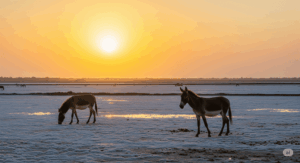
A. Full Moon Nights When the White Desert Glows
Picture this: a vast expanse of crystallized salt stretching to the horizon, bathed in the silvery glow of a full moon. That’s the Rann of Kutch on a full moon night—an experience that’ll make you question reality.
The transformation is nothing short of magical. During the day, the white salt desert shimmers under the harsh sun. But come nightfall during a full moon? The entire landscape turns into something out of a dream. The salt crystals reflect moonlight so perfectly that the boundary between earth and sky seems to disappear.
Visitors who time their trips with the full moon cycle are rewarded with a surreal playground where shadows dance and the ground itself appears luminescent. The stark white landscape against the deep blue night sky creates a natural light show that no camera truly captures (though everyone tries).
Many travelers describe standing in the middle of the moonlit Rann as feeling like they’re walking on another planet. The silence amplifies the experience—just the occasional whisper of wind across the salt crust.
Pro tip: Full moon tours fill up months in advance during peak season, so book early. And bring extra layers—the desert gets surprisingly cold at night, even when your mind is too blown by the beauty to notice.
B. Cultural Significance and the Rann Utsav Festival
The Rann isn’t just a geological wonder—it’s the beating heart of Kutchi culture and tradition. For centuries, local communities have built their lives around this harsh yet beautiful landscape.
The most spectacular celebration of this connection is the Rann Utsav, a three-month extravaganza that transforms the quiet desert into a vibrant cultural carnival. From November to February, the normally desolate area blooms with tent cities, handicraft markets, and stages showcasing folk performances.
What makes this festival unique is how it weaves together so many elements of Gujarati heritage. One minute you’re watching Garba dancers whirl in colorful circles, the next you’re sampling traditional Kutchi cuisine with its distinctive blend of sweet and spicy flavors.
The festival creates a fascinating juxtaposition—luxury tents with modern amenities sit on the edge of an ancient salt desert. By day, visitors explore the white expanse on camelback or in open jeeps. By night, they return to cultural performances under star-filled skies.
For local artisans, the festival is their economic lifeline. Families who’ve practiced traditional crafts for generations—embroidery, leather work, bell making, and pottery—find eager customers among festival-goers.
The Rann Utsav isn’t just a tourist attraction; it’s a celebration of resilience—how communities have not just survived but thrived alongside one of India’s most extreme landscapes.
C. Wildlife Adaptations in This Harsh Environment
You’d think nothing could survive in a salt-encrusted wasteland, right? Wrong. The Rann of Kutch is home to some of the most resourceful creatures on the planet.
The Indian wild ass (Ghudkhur) is the poster child of Rann’s wildlife. These magnificent equids have developed specialized hooves that prevent them from sinking into the soft salt crust. Their bodies efficiently conserve water, allowing them to go days without drinking in extreme heat.
Birds have mastered this challenging environment too. Greater flamingos wade through shallow salt pans, their specialized beaks filtering out microscopic algae and crustaceans. After monsoon, when parts of the Rann briefly flood, thousands of flamingos turn the landscape pink during breeding season.
Desert foxes have evolved to need minimal water, deriving most of their moisture from their prey. Their oversized ears serve as natural cooling systems, dissipating body heat in the scorching desert.
Even insects show remarkable adaptations. Certain beetle species have developed waxy exoskeletons that prevent water loss in the extremely dry conditions.
Perhaps most fascinating are the desert-adapted plants that manage to survive here. Species like the Salvadora persica have deep root systems that tap into underground freshwater sources beneath the salt crust.
These creatures remind us that life finds a way, even in places that seem impossibly hostile to survival.
D. Capturing the Infinite Horizon in Photographs
The Rann of Kutch is a photographer’s paradise, but also their greatest challenge. How do you capture infinity in a frame?
The endless white expanse creates unique photography opportunities you won’t find anywhere else in India. The flat landscape means there’s nothing to block your view all the way to the horizon, creating a perfect canvas for minimalist compositions.
Timing is everything here. Photographers obsess over the “golden hours”—shortly after sunrise and before sunset—when the low-angled light creates dramatic shadows across the textured salt crust. The patterns in the dried salt form natural leading lines that draw the viewer’s eye through your images.
For truly spectacular shots, position human subjects far in the distance to emphasize the overwhelming scale. A single person or camel silhouetted against the white vastness conveys the desert’s immensity better than any wide-angle lens alone.
Reflections are your secret weapon during monsoon aftermath when thin sheets of water temporarily cover parts of the desert. These mirror-like surfaces create perfect symmetry between sky and earth.
Photography challenges abound too—the harsh sunlight can blow out your exposure, salt dust threatens your equipment, and distances are deceptive. Bring polarizing filters to cut glare, extra lens cloths for salt dust, and zoom lenses to compress distant objects.
Most photographers agree: no matter how good your equipment, nothing quite captures the feeling of standing in the middle of this infinite white wilderness.
E. Local Handicrafts Inspired by the Landscape
The stark beauty of the Rann has shaped more than just the land—it’s molded centuries of artistic tradition among local communities.
Kutchi embroidery tells stories through thread and mirror work. Women from different communities—Rabari, Ahir, Jat—each have distinctive stitching patterns passed down through generations. The geometric patterns often mirror the cracked patterns of the dried salt desert, while the tiny mirrors reflect light just like salt crystals under the sun.
The region’s bandhani tie-dye technique creates patterns resembling the desert’s terrain seen from above. Artisans tie thousands of tiny knots in fabric before dyeing, creating intricate designs that echo the dotted landscape of the Rann’s edges where desert meets vegetation.
Leather craftspeople create footwear with upturned toes (called mojris) decorated with embroidery and beadwork in patterns inspired by the desert’s textures. The leather is often naturally tanned using processes adapted to the arid environment.
Bell-making is another signature craft. Copper and brass bells of varying sizes produce different tones when struck—from tiny decorative ones to large camel bells. Traditional designs feature desert motifs and the distinctive “seven rivers” pattern representing water’s preciousness in this parched landscape.
The most fascinating aspect of Kutch handicrafts is how they’ve remained relevant. Contemporary designers collaborate with traditional artisans to create products that appeal to modern markets while preserving ancient techniques—ensuring these desert-inspired arts continue to thrive.
India’s vast expanse cradles some of the most awe-inspiring landscapes on Earth, each telling a unique story of nature’s artistry. From the vibrant floral carpets of Uttarakhand’s Valley of Flowers to the stark beauty of Ladakh’s cold desert, from Meghalaya’s ingenious living root bridges to Kerala’s serene backwaters, these natural wonders showcase the country’s incredible geographic diversity. The dramatic terrains of Spiti Valley, the underwater marvels of Andaman, and the surreal white expanse of the Rann of Kutch each offer experiences that transcend ordinary travel.
As you plan your next adventure, consider stepping beyond the familiar tourist paths to witness these breathtaking Indian landscapes. Each destination not only promises spectacular views but also opportunities to connect with local cultures and traditions that have evolved in harmony with these unique environments. Whether you’re a photographer, nature enthusiast, or simply seeking moments of wonder, these seven landscapes will leave you with memories—and photographs—that capture India’s natural magnificence in ways you never imagined possible.
Discover more from Great Holiday Ideas
Subscribe to get the latest posts sent to your email.